A large contract is signed by the manufacturer. The production requirement for each month increases, but the factory doesn’t have more space and has employees with previous experience or additional hours in the day. A second shift may help temporarily, but it can create new labor and training, supervision, and quality-control requirements.
This is a crucial motive behind robotic automation. Robotics does not only mean replacing human beings with machines. A good application could change the way in which manufacturers make use of their capacity to produce.
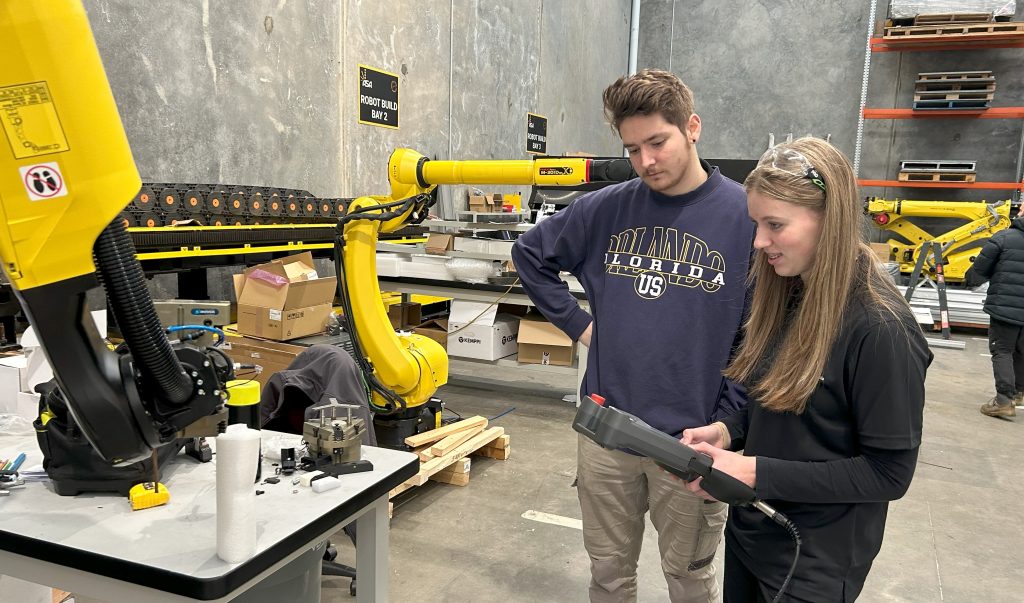
Image credit: automatedsolutions.com.au
Watch the second-to-second time between the products
Manufacturing inefficiency isn’t always significant. Suppose an operator spends 15 seconds positioning a component and then 10 seconds putting it in material, and several more seconds moving it to the next process. On one component the difference isn’t that significant. Those seconds add up when multiplied by thousands.
It is the same with the waste materials. The addition of a tiny amount of additional coatings or dispensing material in a huge production line can lead to the cost of a large amount.
Companies considering robotic automation Australia projects can benefit from examining these small, repeated losses before deciding what equipment they need. The analysis provided by ASA is designed to uncover problems with quality and bottlenecks as in addition to additional constraints and waste in a project.
A Robot must be able to integrate the Process Itself
The choice of a robotics system represents only one decision in engineering. It may be necessary to incorporate tooling, security and controls sensors, conveyers, fixtures, electrical integration, and communication with the current production equipment. Engineers must take into consideration the payload and reach while making decisions about how the robot will move through its work area and interact with the environment surrounding it.
ASA provides the ability to develop concepts, system design and offline programming as part of its approach to robotic automation. Digital simulation allows engineers to test configurations and estimate durations of the cycle before the system is operating at the customer’s factory floor. This is especially helpful when space is limited or when a new robot needs to be integrated into existing production lines.
Painting and Dispensing demonstrates why the importance of repeatability is evident.
Controlled movement is essential in certain manufacturing processes. Imagine coating hundreds of components. The ability to finish components in a short time is the goal. The movement, distance, rate, and even the application needs to remain controlled at the beginning of the production process to the point of completion.
ASA has experts who work in the field of dispensing and painting across industries, including aeronautics, automotive and aerospace. In these settings, industrial robotic automation provides repeatable, programmed movements and minimizes exposure of employees to physically challenging or potentially dangerous processes.
Improved control can also cut down on excessive material consumption, thereby contributing to less waste, as well as productivity improvement.
The System Will Still Need Personnel After Installation
Automatism isn’t a substitute for manufacturing knowledge. The abilities required to manage, maintain, and control the process evolve.
Employees should be aware of how to safely operate equipment and recognize any abnormalities as well as troubleshoot issues and take care of maintenance. Production requirements can alter, which means that the processes and programs could require modifications later.
ASA offers training on-site in safe operation, programming and troubleshooting, in addition to electrical and mechanical maintenance. The company offers servicing and assistance for assessing the condition of equipment, and dealing with wear throughout the lifespan of the equipment.
Capacity is about more than Being able to work faster
In Australia, expanding production capacity does not necessarily mean adding more employees to repetitive jobs or purchasing larger buildings. It’s often better to ask if the production process can be improved.
ASA has been working on and integrating automation systems in Australia since 2002. We also help with projects in other countries. The approach combines needs analysis, engineering, simulation, FANUC robot integration, training, and servicing.
Automation is not the aim. A good system will give an industry a tangible return more dependable production, consistent quality, safer processes, lower waste or a greater capacity in the facility it operates.